Combustible dust & NFPA compliance
A dust collection system that is not built to NFPA is a citation and an insurance problem waiting to happen. We design compliance in from the first sketch, because retrofitting it after the ductwork is hung costs several times what it costs to get right.
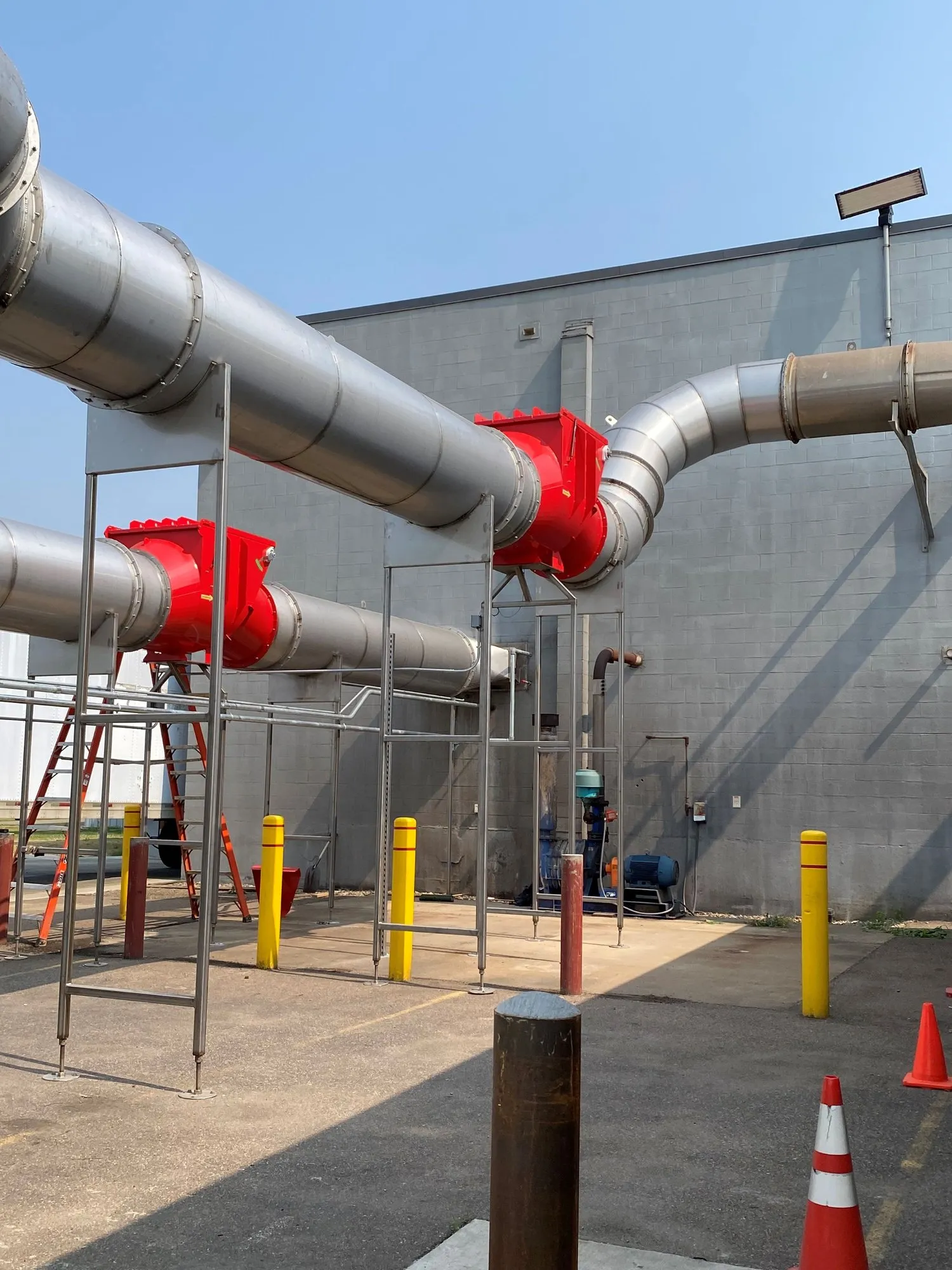

Where compliance actually gets decided
Most combustible dust findings do not come from the collector. They come from the ductwork — undersized runs that let dust drop out and accumulate, missing explosion isolation between the collector and the building, ducting routed through a wall it should never have crossed.
That is the part we handle in-house. Because we fabricate the duct and hang it ourselves, the conveying velocity that keeps dust in suspension, the isolation hardware, and the routing all get decided by the same people, on the same job, instead of being split across a designer and whichever subcontractor was cheapest that month.
The standards we build to
NFPA 652 sets the baseline duty — the dust hazard analysis that establishes whether your dust is combustible and what it takes to handle it safely. NFPA 654 governs the system itself for most manufacturing dusts. NFPA 68 covers deflagration venting; NFPA 69 covers explosion prevention and isolation.
Which of these govern your facility depends on your material and your process. We would rather walk your floor and tell you than quote a system against assumptions.
Explosion protection hardware, supplied and installed
Deflagration vents and flameless venting, chemical and mechanical isolation, high-speed abort gates, backdraft dampers and spark detection. We size this hardware against your dust data, supply it, and install it as part of the system rather than leaving it to a separate vendor and a separate schedule.
Documentation you can hand an inspector
You get the design basis, the equipment cut sheets, and the as-built layout. When an inspector or your insurance carrier asks why the system is configured the way it is, the answer is in writing rather than in somebody's memory.