Industrial ductwork & fittings
The ductwork is where most underperforming systems actually fail, and it is the part nobody looks at. Undersized runs drop dust and accumulate it. Oversized runs never reach conveying velocity. Both are decided before anything is cut.
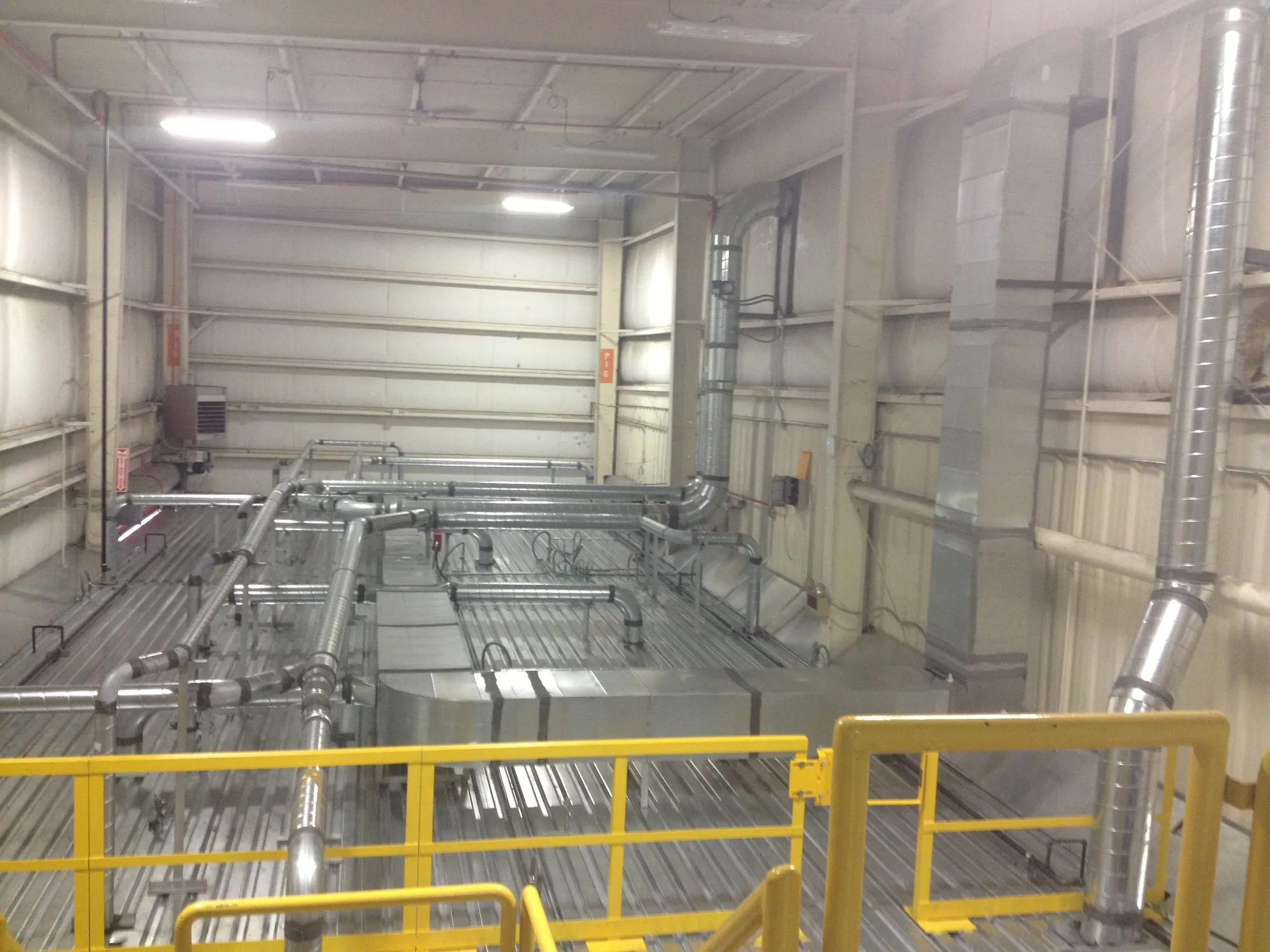
Conveying velocity decides the diameter
Duct is sized so the air stays fast enough to keep your material in suspension all the way to the collector — roughly 3,500 to 4,500 feet per minute for most industrial dust, higher for heavy or moist material. Below that the dust drops out and builds inside the duct, which for combustible material is a hazard sitting over your production floor.
That is a per-material calculation, not a rule of thumb, and it is the reason we size the system before we quote the steel.
Clamp-together and welded, in the right places
Clamp-together spiral goes in fast and comes apart for cleaning and modification, which suits most plants. Welded seams go where the application needs them — abrasive material, higher pressure, or a run you do not want anyone opening casually.
We build in the gauge the material and the standard require rather than the gauge that makes the bid look good. Light commercial duct on abrasive dust wears through at the elbows, and it does it on the outside of the bend where nobody is looking.
Fittings are where the pressure loss hides
A tight elbow, a badly angled branch entry or an abrupt transition costs static pressure on every hour the system runs, and those losses compound across a big system into a fan that cannot do its job. Long-radius elbows, branch entries at shallow angles, and gradual transitions are cheap at fabrication and expensive to retrofit.
Blast gates let you balance the system and shut down branches that are not in use, which returns airflow to the ones that are.