System design & sizing
Most systems that underperform were not built badly. They were sized badly. Capture velocity at the hood, conveying velocity in the duct and static pressure across the whole run are settled on paper long before anyone picks up a plasma torch.
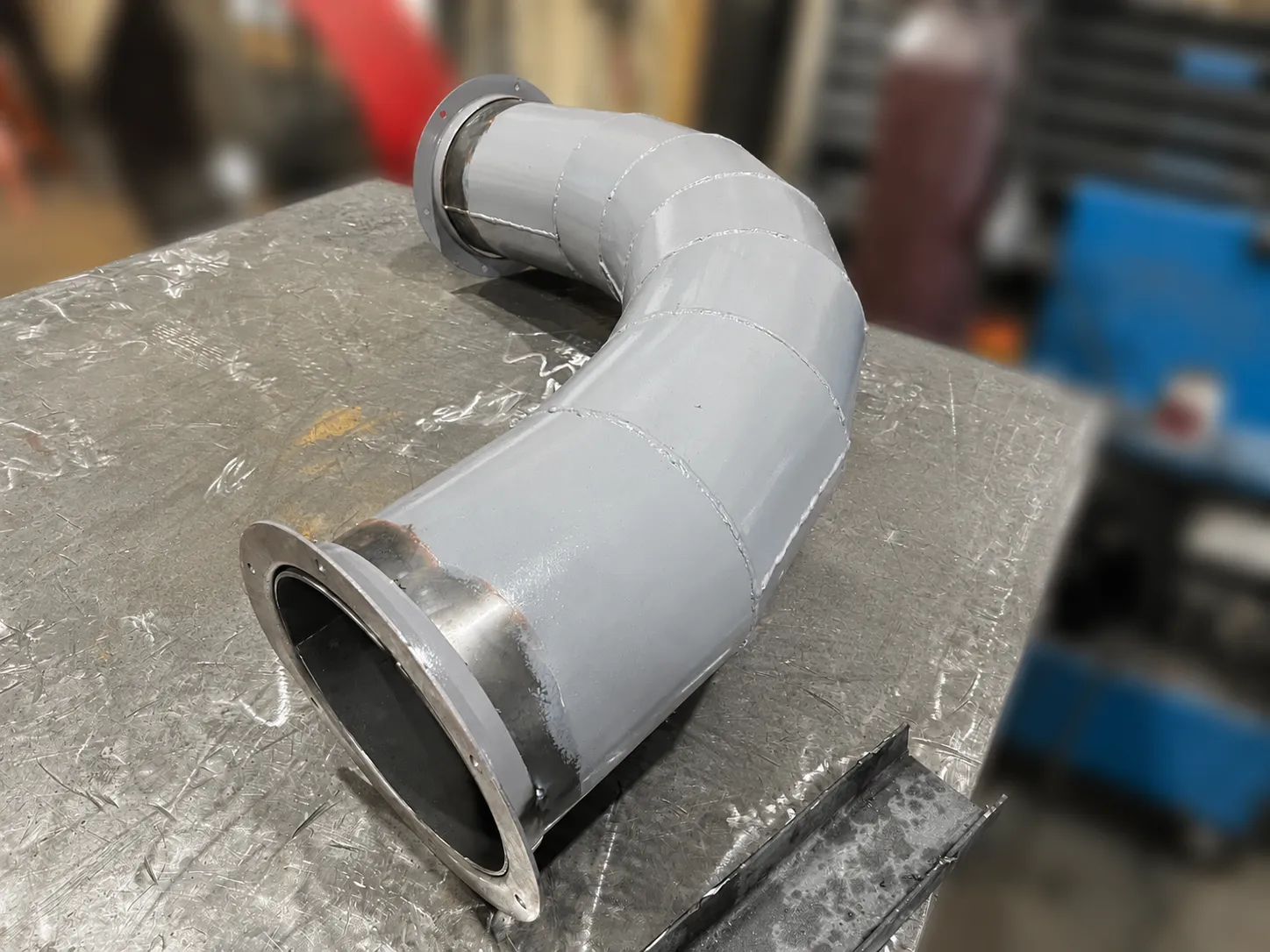
We size and supply the right collector for your process
We specify, supply, install and service dust collectors from the OEMs whose equipment fits the duty — Donaldson Torit for cartridge collectors, Scientific where a baghouse is the right answer — then design, fabricate and install everything that connects that collector to your process.
Being equipment-agnostic is the advantage. A factory-owned rep sells you the one brand they carry; we specify against your dust loading, your footprint and your budget. And because the hood, the duct run and the mechanical install are all handled in-house by the same crew, the parts that actually decide whether a system works are never handed off.
What design covers
Airflow requirements per pickup point. Hood geometry and capture velocity for your specific process. Duct sizing and layout for the conveying velocity your material needs. Static pressure across the system so the fan is selected against a real number. Collector sizing against your dust loading and air-to-cloth ratio. Compressed air and electrical requirements handed to your trades before they are on site.
In-house 3D layout
We model the system against your building before fabrication starts. It is far cheaper to discover a conflict with an existing crane rail or sprinkler main in the model than with a crew standing on a lift holding a section of spiral duct.