Explosion protection & abort gates
If your dust hazard analysis says the dust is combustible, protection is not an option on the quote — it is what makes the system legal to run. The hardware is straightforward. Sizing it correctly, and isolating it so a deflagration cannot travel back into your building, is the part that takes doing.
What the standards actually require
NFPA 68 governs deflagration venting — relieving pressure to a safe place so the collector survives and the building is not the relief path. NFPA 69 covers prevention and isolation: stopping a deflagration in the collector from propagating back down the duct into the process that fed it.
Isolation is the requirement most often missed on systems we are called out to look at. A correctly vented collector with no isolation still puts a flame front into your plant through the ductwork.
The hardware, and what each part is for
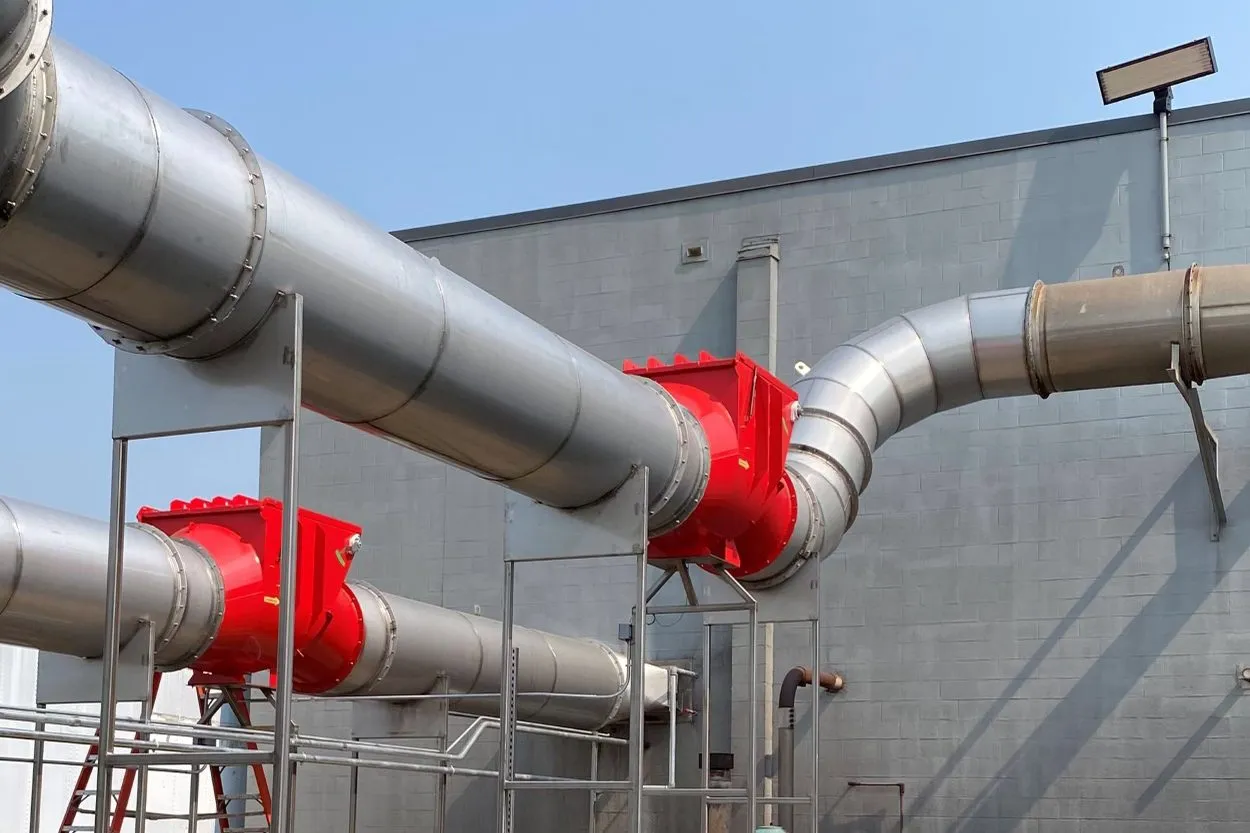
Explosion vents relieve pressure outdoors. Flameless vents do the same job where venting outdoors is not possible, quenching the flame front so the collector can sit inside a building. Chemical isolation suppresses the event in the duct; mechanical isolation valves close it off physically.
High-speed abort gates divert burning material and smoke to atmosphere instead of returning it into the plant on the clean-air side — worth being precise about, because they are frequently described as explosion protection and they are not. An abort gate handles sparks, fire and contaminated return air; it is not fast enough to stop a deflagration, which is what venting and isolation are for.
Spark detection and extinguishing systems catch the ignition source upstream, in the duct, before it reaches a collector full of accumulated dust.
Designed in, then installed by the same crew
We size this hardware against your dust data — Kst and Pmax from your DHA — supply it, and install it as part of the system. One crew, one schedule, and no gap between the company that sold the protection and the company that hung the duct it is supposed to protect.