Fume extraction & downdraft systems
Fume is a capture problem before it is a filtration problem. Get the hood wrong and it does not matter what collector is on the other end of the duct — the fume is already in your operator's breathing zone.
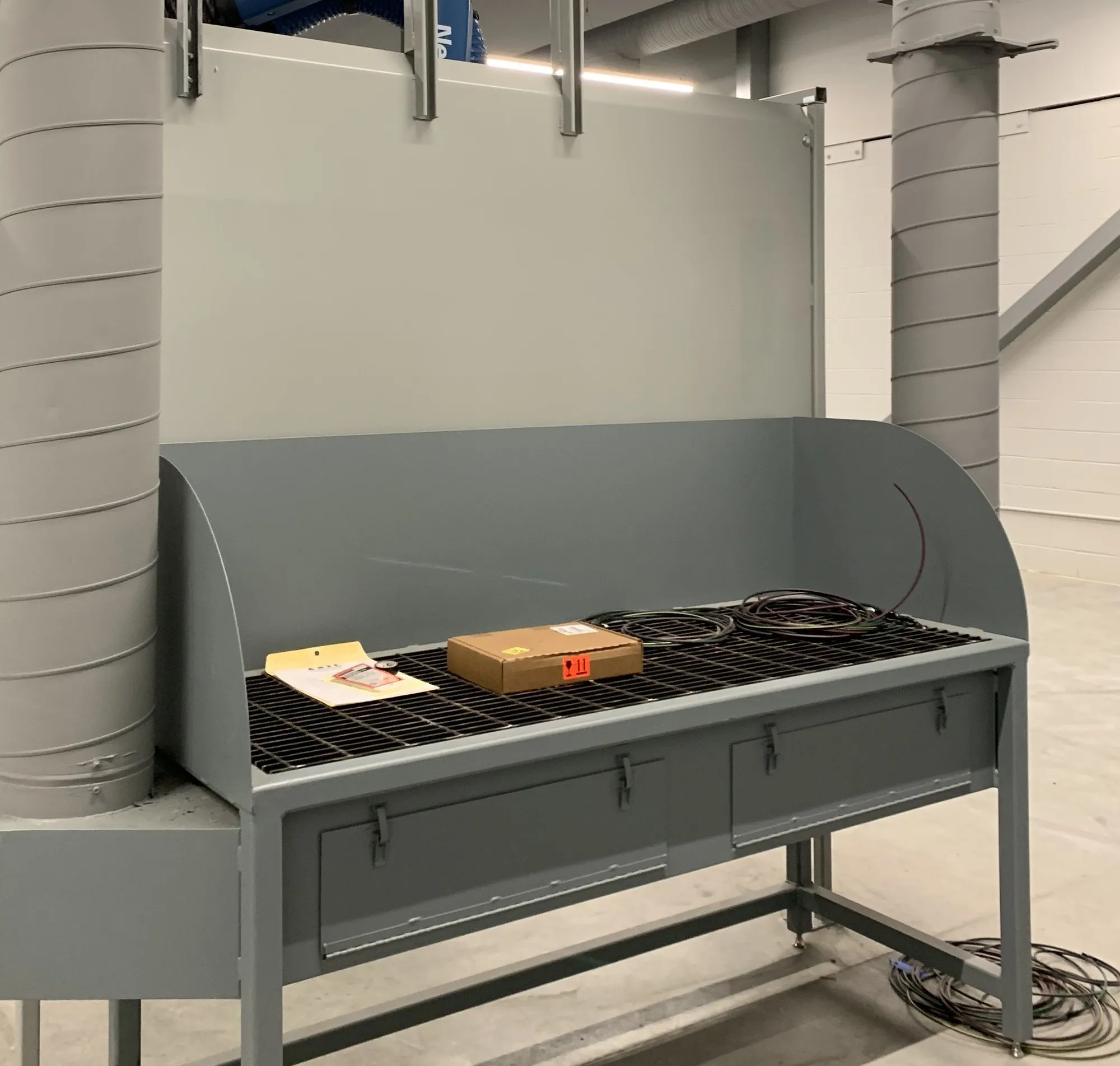
Capture at the source beats cleaning the room
Source capture — an arm, a hood, a downdraft table, an enclosing booth — pulls fume before it disperses. It uses a fraction of the airflow an ambient system needs, which means a smaller collector, a smaller fan, and a much smaller bill for the conditioned air you are throwing outside.
Ambient systems still have a place where the work is too large, too variable or too mobile to enclose — heavy structural welding, large weldments on a crane bay. Often the right answer is both: source capture on the fixed stations, ambient over the open floor.
Hoods built to the process, not pulled from a catalog
This is where we work in-house and most integrators subcontract. Capture velocity falls off sharply with distance from the source, so a hood that is the wrong geometry or two feet too far away simply does not work regardless of the fan behind it.
We fabricate the hoods, the arms' mounting steel, and the ductwork in our own shop, which means the geometry gets built the way it was designed and a field change gets remade the same week.
Weld fume and the exposure limits behind it
Manganese and hexavalent chromium are the two that drive most weld fume projects. Both have exposure limits low enough that "it looks better in here" is not a measure of success. We size against the airflow the capture actually requires and take readings at start-up so you have numbers rather than an impression.